A New Generation, a New Kind of Democracy
There’s a quiet revolution happening across universities, communities, and even corporate workplaces — led not by politicians, but by students, interns, and twenty-somethings armed with smartphones instead of voter cards.
For decades, civic participation meant standing in long queues, filling paper ballots, and trusting someone else to count your voice. But this generation grew up online — and they expect their democracy to be there too.
The question isn’t whether young people will shape the future of democracy. It’s how they already are.
From Apathy to Action
Not long ago, youth were often labeled as politically disengaged — “too busy,” “too cynical,” “too digital to care.”
But the truth is, young people were never uninterested; they were underserved. Traditional voting systems didn’t fit the pace or language of their lives.
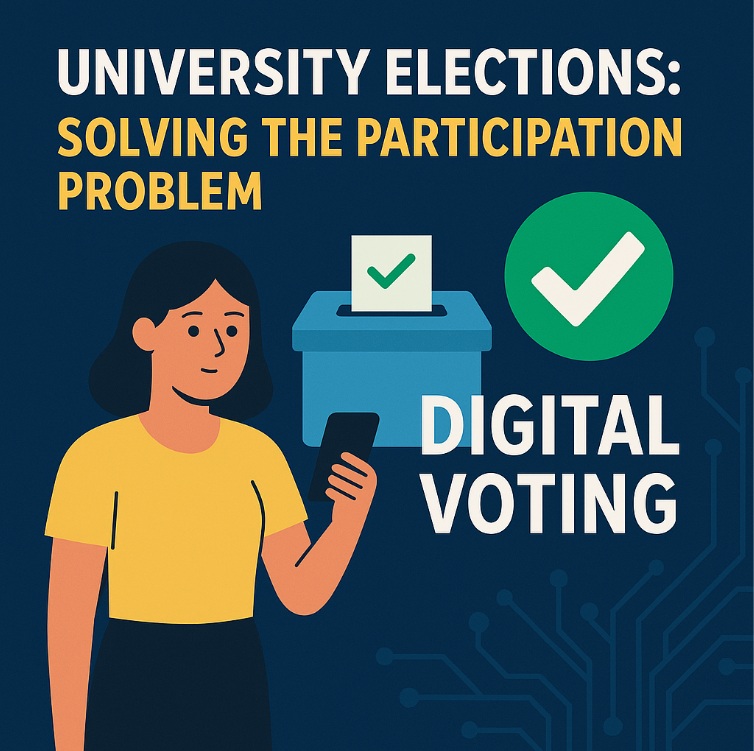
When a student council election in Pune switched to an online voting system last year, turnout jumped from 28% to 74%.
Not because the issues changed — but because the experience did.
For the first time, students could cast their vote between lectures, on their phones, without chasing voter slips or finding classrooms turned into polling booths.
The moment democracy became mobile, it became relatable again.
Convenience Breeds Participation
Youth participation thrives where friction fades.
Think about it: this is a generation that orders groceries, attends classes, and even attends therapy sessions online. Why should democracy be stuck in the analog age?
Platforms like OnlineVotingApp.com have quietly revolutionized student and youth elections across India and abroad — not by making voting “cool,” but by making it convenient, secure, and credible.
The process is simple enough for a teenager, yet robust enough for a corporate board. Voters authenticate via OTP, confirm their ballot visually, and receive an instant confirmation receipt. No confusion, no mistrust, no waiting.
When voting takes less than 30 seconds, participation stops being a burden — and starts being a habit.
The Digital Native’s Definition of Democracy
For digital natives, democracy isn’t about showing up once every few years; it’s about constant voice and visibility.
They grew up with comment sections, polls, upvotes, and feedback forms — all tools of micro-democracy.
So when given the chance to vote online, they bring with them an expectation of dialogue, not just decision.
A recent study from the Centre for Digital Governance found that younger voters engage more when the voting platform also offers information transparency — candidate profiles, vision statements, and live participation stats.
They don’t just want to vote. They want to understand what their vote supports.
This curiosity, when nurtured, transforms passive voters into active citizens.
Social Media: The New Civic Square
Democracy today isn’t confined to polling booths; it thrives on timelines and hashtags.
Movements like #FridaysForFuture and #MarchForOurLives began online — proof that digital spaces can ignite real-world change.
But these aren’t just protests; they’re participatory ecosystems.
They show that the next generation already has the tools to organize, deliberate, and mobilize — what they need now is a trusted platform to formalize their voices into votes.
That’s where digital voting becomes more than a convenience — it becomes a continuation of youth activism.
When an online election link feels as natural as signing a petition on Change.org, democracy expands its reach beyond bureaucracy into daily life.
Case Study: The Virtual Campus Ballot
Take the example of a private university in Bangalore that introduced online voting for student representative elections.
Before digitalization, voting was done through paper slips — turnout hovered around 30%, and students treated it like an afterthought.
After moving to OnlineVotingApp.com, the student union reported an 82% turnout.
More importantly, student engagement with the issues tripled. Candidates began creating digital manifestos, sharing policy proposals on Instagram, and hosting virtual Q&A sessions.
Elections weren’t just an event — they became a conversation.
And that’s how the youth see democracy: not a moment, but a movement.
The Psychology Behind Youth Trust
Older voters often value tradition — sealed boxes, signatures, and stamps symbolize credibility.
Younger voters, in contrast, place their trust in design, usability, and transparency.
For them, a clean, intuitive interface signals legitimacy. A confusing or outdated website does the opposite.
It’s not about age — it’s about mindset.
That’s why the user experience of digital voting platforms is more than cosmetic — it’s psychological.
When young voters see instant feedback (“Your vote has been securely recorded”), they feel reassured.
When they see encrypted confirmations or device-based security messages, they understand that their digital intuition aligns with the platform’s integrity.
Trust is not demanded — it’s designed.
Why Youth Participation Matters Beyond Numbers
High turnout is just the headline. The real story is what happens after.
When young voters engage early, they form lifelong democratic habits.
A 21-year-old who experiences transparent, secure online voting in university is more likely to demand it in corporate elections, professional bodies, and even government systems later on.
That’s how cultural change happens — not through slogans, but through experiences.
As one young voter put it after casting a digital ballot for her college election:
“I used to think voting was something adults did once in a while. Now I realize it’s something I can do — and should do — whenever I have a voice.”
That’s empowerment in its purest form.
The Global Context: Youth-Led Digital Democracies
Countries like Taiwan and Estonia have leveraged digital tools to involve youth in policy discussions and participatory budgeting.
In Estonia, young citizens as young as 16 can vote online in local elections — and turnout in that age group consistently outperforms older demographics.
Why? Because accessibility creates accountability.
When young voters feel their participation matters, cynicism evaporates.
Similarly, India’s youth population — over 65% under age 35 — represents the largest untapped civic force in the world.
By digitizing elections across universities, associations, and youth organizations, we’re not just saving paper — we’re building democratic muscle memory for the next generation.
Challenges Still Remain
Of course, the path isn’t friction-free.
Digital divides persist — not every student has stable internet or devices.
Cybersecurity skepticism remains.
And sometimes, older authorities resist modernization, fearing loss of control or legitimacy.
But every technology adoption curve starts with doubt.
What matters is showing that digital voting doesn’t dilute democracy — it strengthens it by making it more inclusive, transparent, and participatory.
OnlineVotingApp.com has helped countless institutions navigate this transition — pairing robust encryption with human-centered design and multilingual support to make digital democracy accessible for everyone, not just the tech-savvy few.
From Clicks to Citizenship
When young people vote online, they’re not just participating in an election — they’re participating in a new era of governance.
They’re redefining what democracy looks like in the digital age: faster, fairer, and more personal.
They’re proving that civic engagement doesn’t need to be solemn to be serious. It can be colorful, conversational, and community-driven.
And when this generation — the one raised on likes, shares, and live streams — starts treating voting as another form of expression, democracy becomes what it was always meant to be: alive.
Conclusion: The Future Is Participatory
Youth aren’t the future of democracy; they are its present tense.
And as digital platforms become their primary arena of voice, the responsibility shifts to us — the builders, educators, and organizers — to ensure those voices are heard safely, fairly, and fully.
Online voting isn’t just a technological upgrade. It’s a social invitation — to believe that democracy can evolve without losing its soul.
Because when young people start voting with the same enthusiasm they bring to shaping online culture, democracy doesn’t just survive — it thrives.