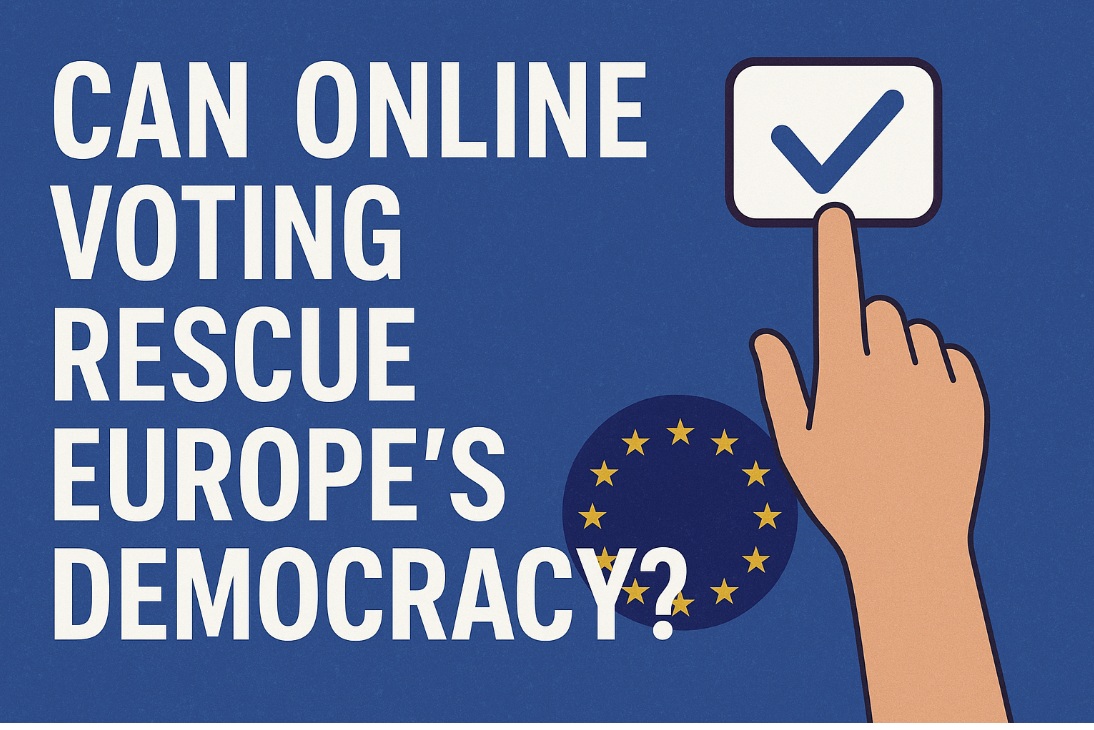
In the run-up to the 2026 U.S. Midterm Elections, one conversation has been steadily gaining traction not about candidates, parties, or swing states, but about how Americans vote. The once-unthinkable idea of casting a ballot online has shifted from a tech enthusiast’s dream to a tangible reform agenda. The question is no longer if the United States will embrace digital voting, but how fast and how securely it can happen.
And the debate is heating up driven by issues of accessibility, election integrity, and public trust in democracy itself.
A Nation Ready for a Digital Shift
The 2024 presidential election reignited discussions around voting modernization. Long lines, outdated machines, and accessibility challenges plagued polling stations nationwide. Meanwhile, over 70% of Americans managed banking, taxes, and healthcare digitally yet voting, one of the most critical civic actions, remained largely analog.
As Congress explores electoral reform proposals for 2026, online voting has emerged as both a symbol of innovation and a flashpoint for controversy. For many reform advocates, it represents a pathway toward inclusion and efficiency. For skeptics, it raises the specter of cyberattacks, misinformation, and mistrust.
But the tide is shifting. Several states, including Colorado, Washington, and Utah, have already piloted limited digital voting systems for overseas and military voters. Their success stories with verifiable, auditable blockchain-backed voting are quietly redefining what’s possible for the rest of the nation.
The Accessibility Argument: Democracy Without Barriers
For millions of Americans, especially those in rural areas or with disabilities, physical voting can be a logistical challenge. Online voting offers a level of access that’s simply impossible through traditional systems.
Imagine a voter in Montana’s snow-covered plains or a disabled veteran in Florida both able to vote securely from their homes. The potential impact on voter turnout is profound. According to a 2025 Pew Research Center report, digital voting trials in three states saw a 15–18% increase in participation among underrepresented groups.
This is not about convenience alone; it’s about equality. When every citizen has an equal opportunity to cast their vote, democracy becomes more representative not less.
Security: The Heart of the Debate
The biggest obstacle to full-scale adoption remains security. Critics argue that no online system can ever be fully immune to hacking or manipulation. Supporters counter that modern cryptographic systems and blockchain technology are already capable of achieving end-to-end verifiable elections.
Platforms like OnlineVotingApp.com, which employ a 1-Voter 1-Machine feature, two-factor authentication (2FA), and blockchain-secured vote records, are proving that speed and security can coexist. Every vote cast is encrypted, anonymized, and time-stamped meaning even administrators can’t alter or trace individual ballots.
The 2026 reforms under discussion aim to include federal cybersecurity certification standards for digital voting systems, similar to how payment gateways and e-commerce platforms are regulated. This could create a framework where technology providers must meet defined thresholds for encryption, transparency, and auditability.
In essence, the U.S. might soon treat digital voting infrastructure as critical national security on par with defense communications.
Lessons from Abroad
Globally, the U.S. is not the first to navigate this transformation. Estonia, often hailed as the gold standard for online elections, has conducted nationwide internet voting since 2005. Over 40% of its citizens now vote online, supported by digital IDs, cryptographic verification, and blockchain transparency.
Similarly, Canada and Switzerland have launched secure pilot programs integrating blockchain-based vote counting to prevent tampering and ensure transparency.
These examples demonstrate that when technology is built on accountability and public education, digital elections don’t erode democracy they reinforce it.
The Trust Factor: Changing Public Perception
Technology alone won’t transform elections trust will.
Public confidence in the electoral process remains fragile in the U.S., particularly after the divisive 2020 and 2024 elections. Disinformation campaigns, deepfakes, and partisan narratives have left voters wary of anything “digital” tied to democracy. That’s why experts argue that digital literacy and transparency are just as vital as encryption protocols.
When voters understand how their data is protected and why blockchain prevents tampering, skepticism fades. Transparency reports, third-party audits, and open-source election code could all play a role in restoring faith.
In short, the future of online voting depends as much on psychology as it does on cryptography.
The Economic Angle: Cost, Efficiency, and Sustainability
Running traditional elections in the U.S. costs billions. Printing ballots, transporting materials, hiring staff, and maintaining polling infrastructure make elections one of the largest recurring civic expenditures.
Online voting could reduce these costs dramatically over time. Early projections suggest that digital elections could cut state election spending by up to 40% once systems are fully implemented. But the benefits go beyond dollars. Faster vote counting, real-time turnout monitoring, and instant verification all contribute to a more agile democratic process.
With proper regulation, this efficiency could make the election process not only cheaper but also greener eliminating tons of paper waste and reducing logistical emissions.
Where the 2026 Midterms Fit In
The 2026 midterms could become a landmark in American democracy a testing ground for hybrid voting models that blend physical and digital participation.
Some states are already preparing proposals for pilot programs where verified voters can choose between in-person, mail-in, or secure online options. These programs are likely to focus on municipal and primary elections first, before expanding to larger federal contests.
The success of these midterm experiments could pave the way for a nationwide framework by 2028, one that embraces inclusivity without compromising integrity.
A Glimpse Into the Future
Picture Election Day 2030: citizens logging in through a verified national voting portal, authenticating via 2FA and biometric ID, casting a blockchain-backed ballot in seconds and watching as live dashboards reflect anonymous, real-time participation rates. No long lines. No misplaced ballots. No delays in counting. Just a transparent, auditable process built for the digital age.
That’s not science fiction anymore. It’s a vision already being engineered by forward-looking election platforms, researchers, and policymakers.
Final Thoughts: Reform with Responsibility
Online voting in the 2026 U.S. Midterms represents more than a tech upgrade it’s a moral step toward a more inclusive democracy. But with that progress comes responsibility. The systems deployed must be secure, auditable, and transparent; the education around them must be clear and trustworthy.
If the U.S. gets this right, it could set a precedent for the world showing that when technology is guided by ethics and designed for access, digital democracy can not only work but thrive.