An op-ed on why Singapore must lead, not follow, the future of online voting
Singapore likes to think of itself as an outlier in global politics and in many ways, it is. Efficient governance. High institutional trust. Low corruption. Clean elections. While other democracies wrestle with ballot chaos, misinformation, and disputed outcomes, Singapore’s elections rarely generate drama. Results are accepted. Transitions are smooth. The system works.
But here’s the uncomfortable truth: a system that works today is not automatically future-proof.
In an era where banking, healthcare, taxation, and even court filings have gone digital, Singapore’s continued reliance on largely physical voting infrastructure feels increasingly out of step with its own digital ambitions. The question is no longer whether Singapore can adopt secure online voting it’s whether delaying that conversation risks undermining the very trust it has worked so hard to build.
Trust Is Singapore’s Greatest Asset and Its Greatest Blind Spot
Singapore’s electoral strength has never been flashy technology. It has been trust: trust in institutions, in procedures, in civil servants who administer elections with discipline and neutrality.
But trust is not static. It is contextual.
Younger Singaporeans live most of their civic lives online. They file taxes digitally. They manage CPF accounts digitally. They verify identities using Singpass. For this generation, standing in line at a polling station feels less like civic pride and more like a system stuck in the past.
Ironically, the longer voting remains one of the few analog rituals left, the more it begins to feel disconnected not sacred.
This isn’t an argument for reckless digitisation. It’s an argument that trust must evolve with technology, not be preserved in a museum.
The Quiet Costs of Physical Voting No One Talks About
Singapore’s elections are efficient, but they are not frictionless.
Polling stations require massive logistical planning. Civil servants and volunteers are mobilised. Physical ballots are printed, transported, secured, counted, and audited. Overseas voters face tight timelines, postal delays, and uncertainty. Working professionals juggle long hours to fit voting into a single designated day.
None of these issues individually threaten democracy but collectively, they create participation fatigue.
And fatigue is dangerous. Not because people revolt, but because they disengage quietly.
Online voting, when designed correctly, doesn’t cheapen democracy. It removes unnecessary friction from participating in it.
Security Is the Objection But It’s Also the Opportunity
The moment online voting is mentioned, critics respond with one word: security.
And they’re right to do so.
But security concerns should not end the conversation they should define how the solution is built.
Modern online voting platforms no longer resemble the fragile systems of the early 2000s. Today’s secure election platforms combine multi-layer encryption, device-level restrictions, voter identity verification, and immutable audit trails that paper ballots simply cannot provide.
Blockchain technology, in particular, changes the security equation entirely.
When votes are recorded on a tamper-resistant ledger, every action leaves a trace. Manipulation becomes visible. Auditability becomes continuous, not post-factum. The system stops relying on blind trust and starts offering verifiable trust.
For a country like Singapore obsessed with precision, accountability, and data integrity this should be an advantage, not a threat.
Why Singapore Is Uniquely Positioned to Get This Right
Unlike many democracies, Singapore does not face the foundational problem of institutional distrust. That gives it something rare: room to experiment responsibly.
A phased, tightly controlled introduction of online voting could begin with:
- Overseas Singaporeans
- Students studying abroad
- Senior citizens with mobility constraints
- Internal party or union elections
Each controlled use case builds technical confidence without risking national outcomes.
And unlike fragmented political systems elsewhere, Singapore can implement such pilots without turning them into ideological battlegrounds.
If any country can introduce online voting without descending into chaos, it is Singapore.
The Real Risk Isn’t Hacking It’s Irrelevance
The biggest danger to Singapore’s electoral system is not foreign interference or cyberattacks. It is complacency.
Around the world, citizens are demanding elections that are not just fair, but accessible, transparent, and verifiable in real time. Countries that fail to modernise don’t suddenly collapse they slowly lose relevance among younger voters.
When participation feels inconvenient or outdated, engagement drops quietly. And when engagement drops, legitimacy weakens subtly.
Online voting systems that allow voters to cast a secure, authenticated vote in under a minute with confirmation, traceability, and privacy are not futuristic fantasies. They are already being used in limited capacities across municipalities, universities, unions, and corporate governance worldwide.
Singapore can either shape this future or import it later under pressure.
What a Singapore-Grade Online Voting System Should Look Like
Let’s be clear: not all online voting systems deserve trust.
A Singapore-ready platform must meet standards far higher than global averages. It must:
- Authenticate voters using strong multi-factor identity verification
- Prevent multiple votes across devices or sessions
- Encrypt vote data end-to-end
- Offer auditable, tamper-proof vote records
- Remain usable for all age groups, not just the tech-savvy
- Provide clear documentation and responsive support
In other words, it must feel less like an app and more like critical national infrastructure.
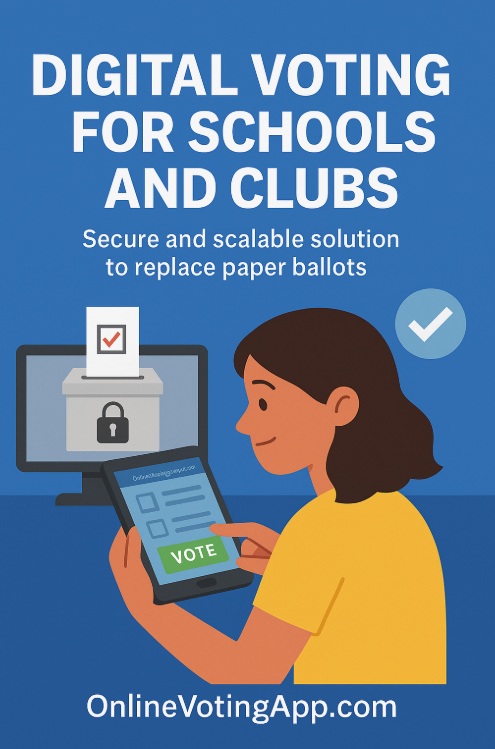
This is where modern platforms like OnlineVotingApp.com represent a shift in thinking not selling voting as convenience alone, but as secure civic infrastructure. Systems designed from nomination to results, built to scale, and audited by design, not by assumption.
The Political Reality: Online Voting Will Come With or Without Consensus
Here’s the uncomfortable political truth: online voting will eventually arrive, whether policymakers fully agree or not.
The only real question is whether it arrives through deliberate policy leadership or reactive crisis management.
If Singapore waits until a demographic shift force rushed reform, the rollout will be defensive and contentious. If it acts now, gradually and transparently, it sets global standards instead of following them.
Leadership isn’t about preserving the past perfectly. It’s about adapting principles to new realities without losing integrity.
Final Thought: Democracy Doesn’t Break When It Modernises It Weakens When It Refuses To
Singapore’s democracy is stable. But stability should never be confused with permanence.
The future voter expects systems that are secure and accessible, verifiable and efficient, trusted and transparent. Online voting, done correctly, meets all of these expectations.
The real controversy isn’t whether Singapore should explore online voting.
The controversy is why a nation known for digital excellence hasn’t already taken the lead.
If Singapore truly wants to remain a model of modern governance, it must be brave enough to modernise even the institutions that already work.
Because the strongest systems are not the ones that resist change, they’re the ones that engineer it carefully.